
ACCESS Consensus Group and ZERVITA e.V. call for a coordinated strategy on the elimination of HPV-related cancers in Germany in new Position Paper
HPV-related cancers are preventable. In November 2025, ZERVITA e.V. and the ACCESS Consensus Group published our position paper “Because we can! Eliminate HPV-related cancers – with a nationally coordinated strategy that integrates vaccination, screening, and the patient perspective”. The paper reaffirms that elimination is achievable through targeted HPV vaccination and early detection through screening. Germany currently lacks binding political measures to achieve this goal. This existing gap can and must be closed. Our position paper brings together leading experts to highlight the need for a nationwide, coordinated, and holistic strategy grounded in a strong policy framework. The tools already exist to prevent and eliminate HPV-related cancers. What we need now is structured support to ensure every person has access to them.
Our key recommendations:
- Strengthen strategic governance and monitoring, e.g., through the implementation of an HPV vaccination register and digital recall systems
- Improve access and enhance invitation systems for organised screening
- Strengthen HPV vaccination programmes, such as in schools
- Improve communication and public education about HPV, e.g., through a national, evidence-based information campaign on HPV prevention
- Ensure supportive structural and financial frameworks that improve preventive services, such as improved remuneration for preventive services for healthcare professionals
We now have a crucial opportunity to use the knowledge and tools we have to jointly implement structured, equitable, and sustainable prevention of HPV-related cancers – because we can.
ACCESS Consensus Group and ZERVITA e.V. convene experts in Germany to elaborate recommendations for a future national strategy for the elimination of HPV-related cancers
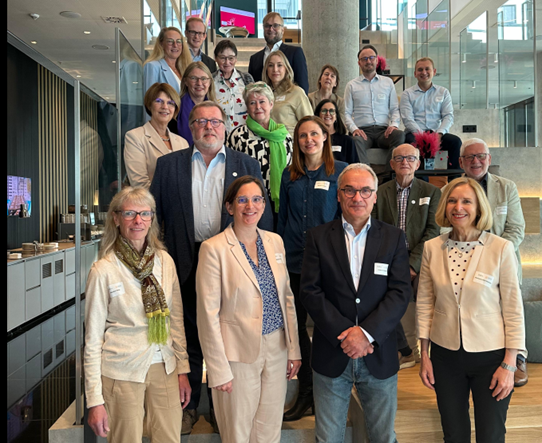
The elimination of HPV-related cancers is no longer a distant aspiration, but a realistic and achievable public health objective. These cancers are distinctive in that they result from a clearly identifiable and preventable cause. Unlike many other forms of cancer, an effective means of primary prevention exists in the form of HPV vaccination. Secondary prevention is also well-established through cervical cancer screening. Yet, despite these conditions, the two pillars of prevention – vaccination and screening – remain underutilised in Germany relative to what is both possible and necessary.
Nationwide, the HPV vaccination rate among 15-year-old girls remains below 55%, and among boys, it stands at just 34%. As a result, Germany falls well short of the WHO target of vaccinating 90% of girls under the age of 15, and also lags significantly behind many other European countries. In addition, participation in cytology-based cervical cancer screening stood at only 45% among women under the age of 35 with statutory health insurance in 2021. Rates are even lower among certain high-risk populations, particularly socioeconomically disadvantaged groups, migrant women, and women with lower levels of education, who are especially underserved.
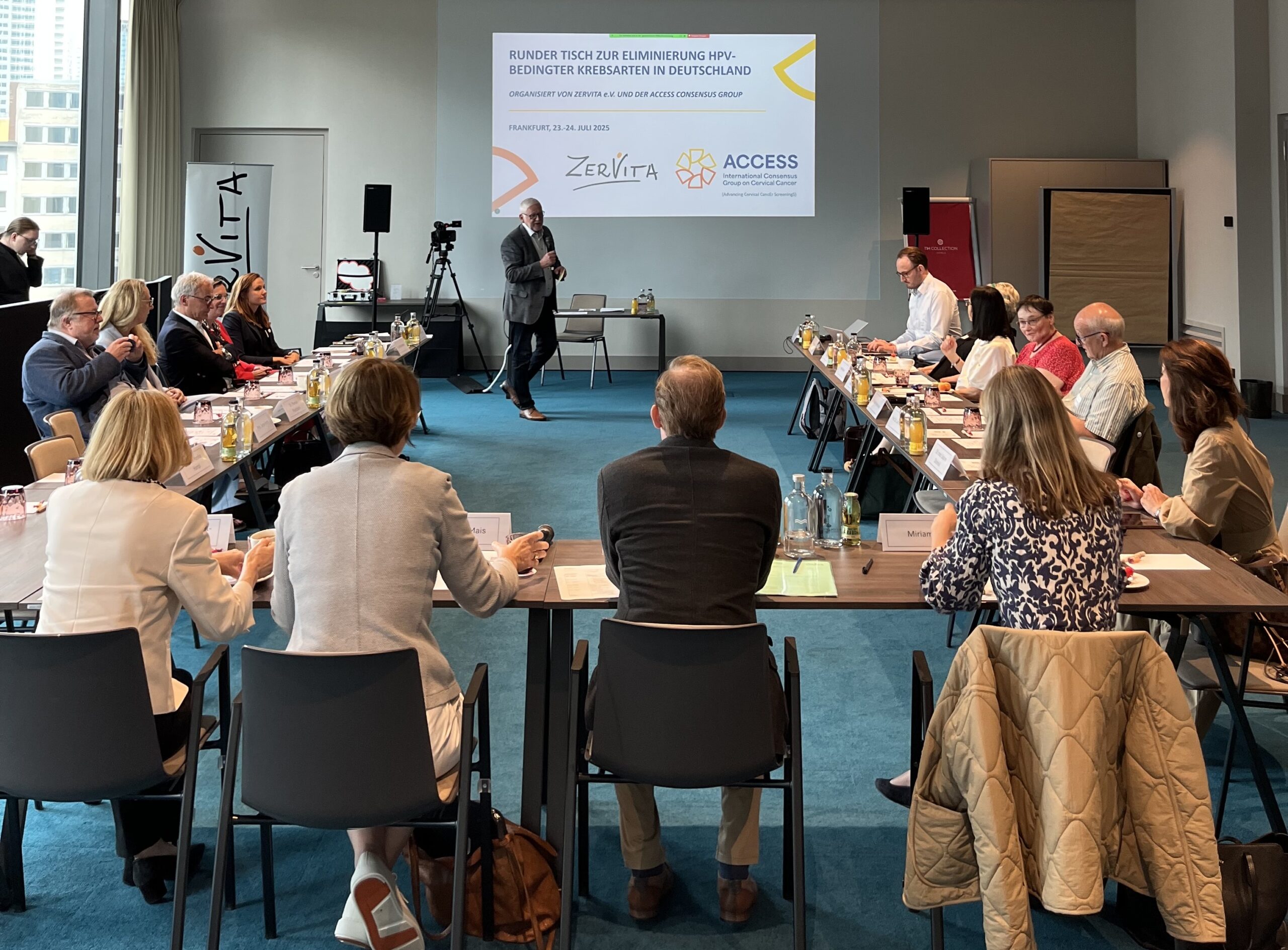
On 23-24 July 2025, the ACCESS International Consensus Group on Cervical Cancer and ZERVITA e.V. co-organised an expert roundtable in Frankfurt. Chaired by Prof. Thomas Iftner, ACCESS member and Chair of ZERVITA e.V., the meeting convened 20 experts and key opinion leaders from across Germany, including gynaecologists, pathologists, paediatricians and patient representatives. The discussions focused on the urgent need for a national strategy to eliminate HPV-related cancers, with a particular emphasis on boosting HPV vaccination and cervical screening uptake.
Presentations were delivered on the current state of HPV vaccination and cervical cancer screening in Germany, followed by insights into existing information, education and awareness-raising efforts. Perspectives from affected individuals and patient groups were shared, along with an in-depth examination of the barriers to participation in both vaccination and screening. Participants also explored strategies to raise HPV vaccination coverage and improve access to screening services.
One of the key outcomes of the roundtable was the recognition that a holistic and unified strategy, integrating both HPV vaccination and cervical cancer screening, is crucial for reaching elimination, moving away from siloed approaches to a coordinated, strategic effort. The meeting further underscored the importance of strengthening collaboration among stakeholders and highlighted the vital roles of policymakers, health insurance providers, and civil society in driving progress toward the elimination goal. The need for sustained public education and continuous training for healthcare professionals was also emphasized as essential to effective cancer prevention.
This meeting laid the foundation for the development of an expert consensus policy paper outlining key components of a future national strategy to eliminate HPV-related cancers in Germany. The paper is expected to be published by the end of 2025.
Read ZERVITA e.V.’s blog post on our joint roundtable here.
The ACCESS-ZERVITA expert roundtable was supported by Hologic and MSD Germany.
_______________
ABOUT THE ACCESS CONSENSUS GROUP
The Advancing Cervical CancEr ScreeningS (ACCESS) International Consensus Group on Cervical Cancer is made up of professionals with a broad range of experience and expertise in women’s health — focusing on cervical cancer from clinical, epidemiological, academic, patient, and advocacy perspectives. Together, we work to review the latest available evidence that supports optimal cervical cancer screening strategies in countries with organised cervical cancer screening programmes and make recommendations to relevant stakeholders and policymakers to advance women’s health by increasing the uptake of screening amongst under-screened women.
_______________
ABOUT ZERVITA
ZERVITA is an initiative and non-profit association in Germany dedicated to raising awareness, promoting prevention, and fostering collaboration to combat HPV-related cancers. It focuses on public outreach and education for both the general population and professional audiences, advocating for vaccination, early detection, and the long-term goal of eliminating HPV-related cancers in Germany.